UMRA’s members gather at 11:30 at the Campus Club, in Conference Room ABC, on the fourth floor of Coffman Union, on the 4th Tuesday of each month, for lunch, good fellowship, and an interesting speaker.
Reservation Deadline is always the Thursday before the Tuesday meeting
Please rush your reservations with your entrée selections (see below) and your check for $35 for each reservation to:
UMRA May Reservations
c/o Judy Leahy Grimes
1937 Palace Ave
St. Paul, MN 55105-1728
Or, contact her before the deadline at 651-698-4387 or jleahy4654@aol.com
Please honor the reservation deadline date; if cancellations are necessary, please let us know by noon the preceding Thursday.
With the intriguing subject, “Two in a Bed
and What Couples Know and Don’t Know
about Each Other,”
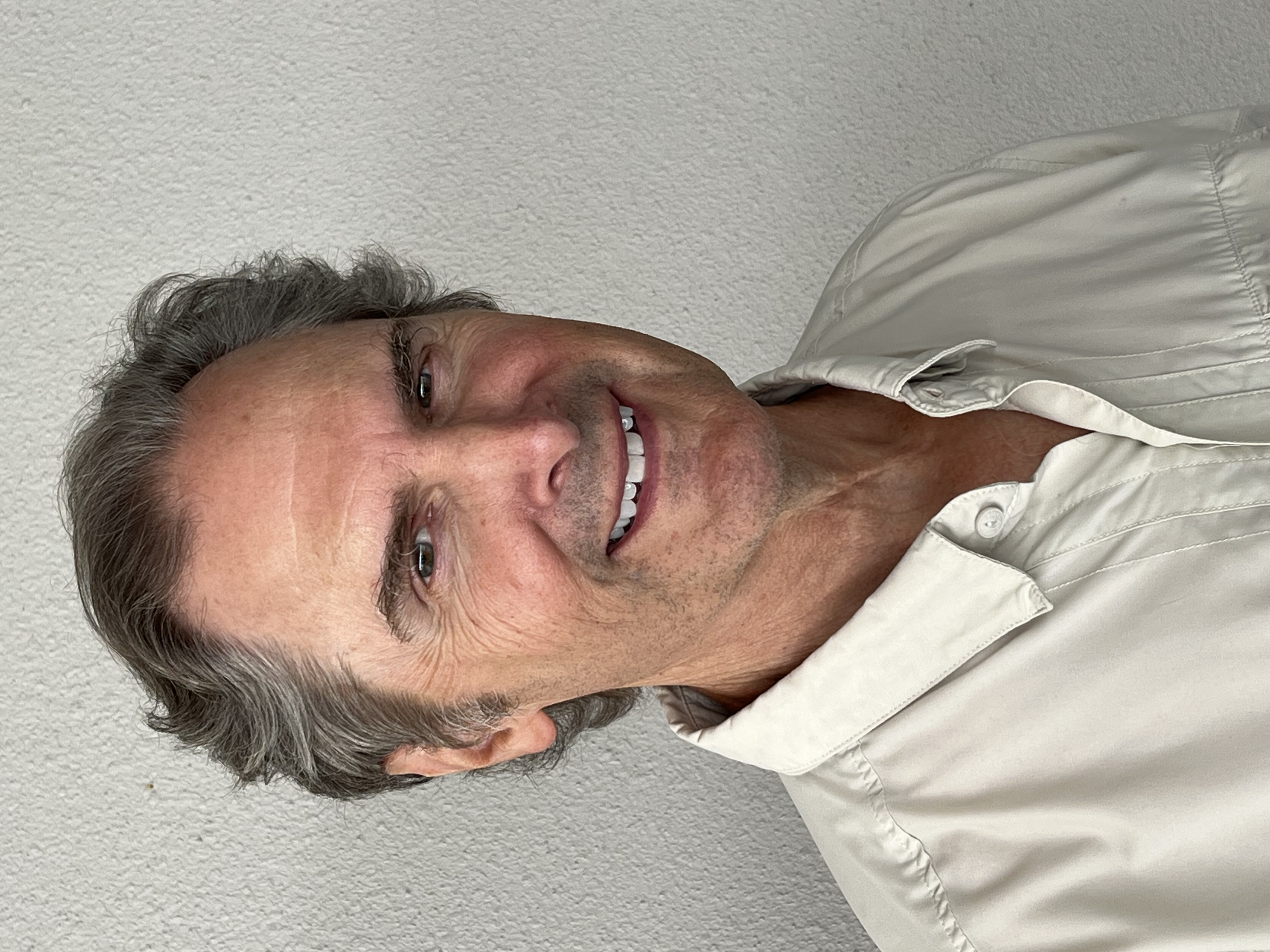
Paul Rosenblatt, professor emeritus, Family Social Science, will address the UMRA annual meeting audience
on May 28.
After 50 years
of teaching and
12 books, Paul Rrosenblatt is
most loved for
what he does
for others,
including his
many graduate students. Eeven though
he retired from the Family Social Science
department two years ago, he still goes into
his office almost every weekday, where he
writes, advises grad students, serves on grad
student committees, collaborates with colleagues, and sometimes meets with faculty committees.
Writer for the StarTribune Gail Rosenblum
said about Paul Rosenblatt: "Despite authoring academic tomes such as "Metaphors of
Family Systems Theory" and the equally
heady "Sshared Obliviousness in Family Ssystems," and despite his awards for research
and teaching, Rosenblatt never lost sight of
how ordinary folks live, what we care about in our boots-on-the-ground lives.”
Professor Rosenblatt earned his Ph.D. in
psychology from Northwestern University.
Most of his books have focused on couple
and family systems as they relate to specific issues such as grief, racism, or family
farming. His research over the years has
included many collaborations with students. In addition to numerous awards for
his research and books, he was elected to
membership in the University of Minnesota Academy of Distinguished Teachers
because of his effectiveness as a teacher.
Rosenblatt has received an unusual number
of awards from professional associations. Among his book awards is the Gustavus
Myers Center for the study of Human Rights award for his outstanding book:
Multiracial Couples: Black and White Voices. His best known book: Two in a Bed: The
Social System of Couple Bed Sharing was
one of the top 10 University Press books of
2006. although Two in a Bed is a scholarly
book, its interview material on the challenges of bed sharing interests many people, and so to date he has been interviewed
180 times by media reporters.
Two in a Bed is based on interviews of more
than 40 couples and explores what social
interaction comes with sharing a bed. What
happens when one partner snores? Steals
the covers? Prefers to sleep at a temperature that the other partner finds stifling or
freezing? These interviews revealed important information about sleep, relationships,
intimacy, couple problem-solving, and Aamerican society.
Currently, he is reading page proofs for a
new book with faculty colleague Elizabeth Wieling on knowing and not knowing in
couple relationships. Based on intensive
interviews, the book explores what people know and do not know about a partner, what they want to know and don’t want to know, and in what ways they want to be known and what they would prefer to keep secret. In his presentation on May 28 at our annual, special lunch and membership meeting, Professor Rosenblatt will tell us about his insights from the new project and the Two in a Bed masterpiece. what a way for UMRA to end the year!
— Ron Anderson, UMRA President
(Please be sure to indicate your menu selection when you send in your reservations.)
Social
Come early and mingle with friends and colleagues. Wine and refreshment cash bar opens at 11:30 a.m. with lunch served at noon. The business meeting and program will follow at approximately 12:45 p.m.
Menu
Entrees: please select one from the following:
1. Mustard Crusted Chicken: Boneless, skinless chicken breast dipped in stone-ground mustard and panko breadcrumbs, then pan seared, and topped with spinach pesto, served over parsley and chive mashed potatoes.
2. Balsamic Rosemary Chicken: Boneless, skinless chicken breast marinated with garlic and rosemary, pan seared, and finished with chicken demi-glace and balsamic reduction. Served over Campus Club pilaf.
3. Wild Mushroom Ravioli: Mushroom-filled pasta topped with roasted seasonal vegetables and served with parmesan cream sauce.
April 23, 2013 Luncheon
Arthur J. Rolnick spoke on “The Economic Case for Public Investment in Early Childhood Education.”
He’s a Michigan native, who received bachelor’s and master’s degrees from Wayne State in mathematics and economics. He earned his Ph.D. in economics in 1973 at the University of Minnesota and spent his professional career at the Ninth Federal Reserve Bank in Minneapolis. At the time of retirement in 2010, Art was senior vice president and director of research at the Fed.
Art’s recent work examines early childhood development and argues that expansion of ECD programs would aid economic growth. In his prsentation he noted progress that is being made in Minnesota, including likely all-day kindergarten. His persuasive argument centered on increasing evidence not only that brain development must be nurtured from ages 2 and 3, but that the whole living environment must be addressed, ideally beginning with prenatal care.
March 26, 2013 Luncheon, Peabody-award-winning broadcaster and New York Times best-selling author Krista Tippet, held a dialog with UMRA President Ron Anderson, a "Conversation on Meaning in Life"
Krista Tippet’s March Visit
Krista Tippet, host of the popular weekly public-radio program, “On Being,” headlined UMRA’s luncheon program on March 26. She said having UMRA President Ron Anderson interview her was relaxing, more comfortable for her being on the other side of the microphone for a change. The format allowed their conversation to touch on several topics.
Her early years. Krista grew up in Oklahoma, the grand-daughter of a Baptist minister. She spent most of the 1980s in divided Germany, working as a New York Times stringer in Berlin, where she saw that “your mental state can be what you make it.” She wanted a theological education. “I just couldn’t really see the relevance of (religion), didn’t think much about it for about ten years,” she said. “In contrast, I was deeply animated by politics; I thought all the interesting questions and answers were political. And then I walked my way into the world of high politics, and it left me wanting in human terms.”
Politics and spirituality. She ended up thinking, “the really big questions in life were beyond the reaches of politics; a big part of the picture was missing.” This led her to spiritual and religious questions. Yale Divinity School gave her a chance to think this through and its relevance to the world. For her, a religious education was “a great preparation for being a questioner,” as she is in her current career.
Complexity, difficulty, and difference. Krista doesn’t think of herself as a peacemaker. The word suggests a placid place where you’re all in agreement. Instead, “Our challenge is to learn to live with our differences and engage difference and accept that we are going to remain different on all kinds of issues and figure out how to navigate that,” she said. “We have to completely reframe how we approach complexity and difficulty and difference” and live these questions.
Religions today. On the state of religions today, Krista said, “The fastest growing forms of Christianity are charismatic and Pentecostal.” This trend harks back historically since “much religion was a cathartic experience,” she said. Over time, “We changed it into sitting straight and listening to a monolog.”
Compassion. Referring to Karen Armstrong’s book on compassion, Krista noted that “Compassion, forgiveness, love—those are really hard, but hospitality is something we can extend even if we don’t like people.” Today, she said, “We have so much materially and we fill up all our space with that…. Also, in all of our experience, silence is an element of spiritual and human nurture and insight. Silence is something not given; you have to carve it out” in cluttered lives.
— reported by Gwen Willems

Tippet created and hosts the weekly public radio program, “On Being” (formerly “Speaking of Faith”). Her one-hour program is currently broadcast on more than 200 public radio stations in the United States and globally via NPR’s website and pod-cast. She describes her mission as: “taking up the great animating questions of human life: What does it mean to be human? And how do we want to live?”
Tippet and Anderson engaged in conversation about meaning, spirituality, and ethics
in the midst of 21st century cultural and technological shifts.
UMRA members were treated to a sampling of Tippett’s talent for
creating an intellectually open space in which a wide range of
extraordinary minds can speak to their truths. If you missed this
program, visit her website (www.onbeing.org/ ) for current shows
and archived interviewsTheir dialog held a capacity crowd enthralled during the post-luncheon hour. Watch their discussion!
February 26, 2013 Luncheon, U Alum Garrison Keillor, legendary humorist and author spoke on "How I Wound Up Here."
Keillor has returned to the University to teach creative writing classes. He speaks highly of his alma mater and entertains his University audiences with fond stories about working as a U parking attendant, (long before the days of ramps and our machine-attended lots).

Jan 22, 2013 Luncheon Charles Schultz, Professor and Head, Department of Psychiatry, U of MN “Leading-edge research on early detection of Schizophrenia”
He presented a summary of leading-edge research on early detection of schizophrenia. The research cited offers great promise if can be applied. Early detection coupled with available treatments may greatly reduce the effects of this disease.
Kathryn Pearson is an Associate Professor specializing in American politics; her research focuses on the United States Congress, congressional elections, political parties, women and politics, and public opinion. She is a frequent guest on TPT's "Almanac" weekly local news and politics program.
She outlines the November 6th election results and responded at length to questions about the meaning of it all.
The January, 2012 lunch featured an exciting opening act followed by a spectacular headliner, Marla Spivak, who talked about bees, delivering charm and education at the same time.
The opening act, however, was sheer improvisational comedy. People kept wandering in from the hallway and claiming to have reservations! Others, already seated, not in on the joke, were patient and polite. A performer impersonating "me" acted puzzled and powerless. Saving the day were the intrepid Campus Club servers —busy as bees, they buzzed around and found chairs and, eventually, food for all.
What did we learn at the January meeting? We learned that honey bees are even more industrious and ingenious than we thought, they are crucial in the food system, and very fortunate to have the loving attention of the likes of Professor Marla Spivak and her students. We all also learned the importance of reservations!!
Perhaps we (your committee and newsletter editor and webmaster) have not been clear in communicating this, but the fact is—even if you plan to pay at the door instead of sending in a check, you must call or e-mail to reserve your place(s) for lunch by the deadline listed on page one. Please! — Frank C. Miller
Frank describes himself as Amateur Reservationist. We describe him as UMRA's Disarming Humorist. Frank would be happy to have reservations assistance at future luncheons. You can reach him at mille005@umn.edu or 612-331-2145.
Program Committee (2012-13)
John S Adams (Chair); adams004@umn.edu;
612-925-1340
Ron Anderson; rea@umn.edu;
952-473-5910
Craig Swan; swan@umn.edu;
612-374-2496
Calvin Kendall; kenda001@umn.edu;
763-476-4637
Julie Medbery; jmedbery@comcast.net;
651-342-8999
Richard H. Skaggs; skaggs@umn.edu;
651-483-3580
The Program Committee is looking for good speaker ideas for next winter and spring. If you have any suggestions, please contact John Adams (adams004@umn.edu).